
BakingSourdough
Almost every serious dough recipe throws you a number in percentages - 65%, 75%, sometimes 85% - and doesn't always explain what to do with it. This is the hydration: the ratio between the weight of water and the weight of flour in the dough. This is the only number that best predicts how the dough will feel in the hand, how much it will rise, and how the cut will look at the end.
The good news: it's a one-line calculation. The less good news: the exact same percentage can behave completely differently in your kitchen, and that's why it's worth understanding what's behind the number and not just memorizing it.
How to calculate hydration
The formula: the weight of water divided by the weight of flour, multiplied by one hundred. 500 grams of flour and 375 grams of water is 375 divided by 500, which means 75% hydration. The flour is always 100% - all other ingredients are measured in relation to it. This is the method called "baker's percentages", and is why you can triple a recipe without thinking twice.
- Only by weight, never by cups. A cup of flour can vary between 120 and 160 grams depending on how much you pressed - and that alone moves the hydration by 10% or more.
- Sourdough enters the calculation. Sourdough at 100% hydration is divided half-and-half: 100 grams of sourdough starter is 50 grams of flour and 50 grams of water, and both are counted.
- Other liquid components are also considered. Milk, eggs and oil contribute liquid, so sweet dough with eggs is almost always wetter than the number on the paper suggests.
What each range actually means
- 50%-60% - dry and stiff dough. Biga, pretzel, pasta. Almost does not stick, but requires kneading power.
- 60%-65% - the comfort range. Neapolitan pizza, challah, rolls. The dough is smooth, rolls nicely and you can work with it by hand without tricks.
- 65%-75% - rustic bread and sourdough bread. Starts to stick, benefits from folding instead of kneading, and gives open pores and a good plate.
- 75%-85% - ciabatta, focaccia, baguette. Dough that spills more than it is loose. An impressive result, but requires wet hands, parchment and patience.
- Over 85% - territory of experienced bakers. Without strong flour and without a good folding technique it ends up in a puddle.
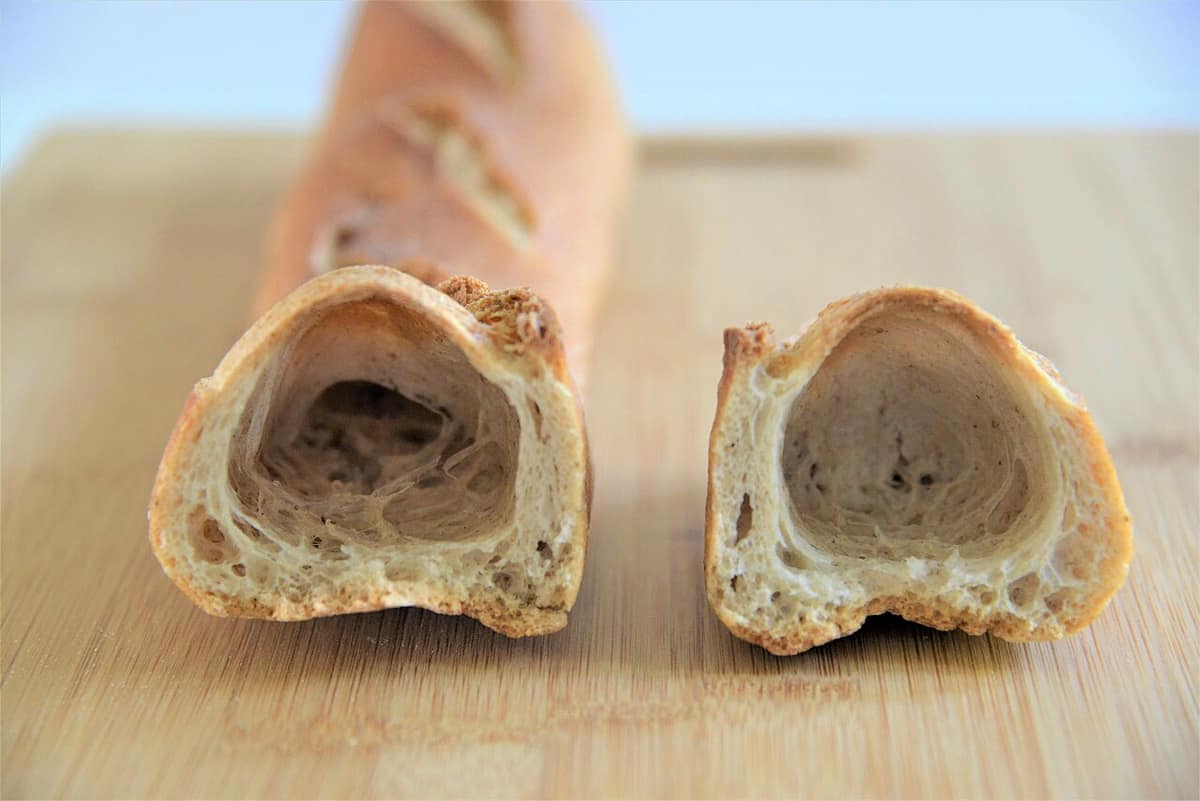
A simple rule of thumb: as the hydration increases, the pores open up and the bread stays fresh longer - but the dough loses its ability to hold its shape. Tall, round bread is usually a drier dough; Flat and open bread is a wetter dough.

Why does the same percentage behave differently with you?
This is the most common frustration in home baking: a 75% recipe that worked perfectly on YouTube turns into a batter. The reason is almost always one of the following three.
- The type of flour - wholemeal flour and rye flour absorb much more water than white flour, because the bran and the germ drink by themselves. A 75% dough with 50% whole wheat flour will feel like a 65% dough with only white flour.
- The protein of the flour - "strong" flour (12%-14% protein) builds a gluten network that holds more water. Regular all-purpose flour will crumble at the same percentage that bread flour will easily withstand.
- Moisture and climate - flour that sits in the cupboard in an Israeli summer has already absorbed moisture from the air, and therefore "needs" less water from the recipe. A difference of 2%-3% is completely normal.
The practical solution: don't pour all the water at once. Leave 20-30 grams aside, mix, and add only if the dough feels too hard. It's easy to add water, almost impossible to take it out.
How to increase hydration without suffering
- go up a little. 5% each time. If you are at home at 65%, try 70% before jumping to 80%.
- Autolyse - mix only flour and water and let them rest for 30-60 minutes before adding salt and yeast. The flour is enough to absorb the water, and the dough immediately feels less sticky.
- Folds instead of kneading. Every 30 minutes, stretch one side of the dough and fold it to the center, four times around the bowl. Three-four rounds like this build a triple structure on the counter that you won't get with wet dough.
- Wet hands and parchment. Wet dough does not stick to wet hands, and it does stick to floured hands. A dough scraper is the difference between scraping the dough off the counter and moving it in one motion.
- Do not add flour while working. Every flour that is added lowers the hydration - that is, cancels exactly what you were trying to achieve.
Common mistakes
- Calculate the hydration without counting the water in the sourdough starter. This is the most common gap between the number and the feeling.
- Chasing huge pores. Big holes look good in the picture, but in sandwich bread they just say the spread oozes out.
- increase hydration and also shorten fermentation. Wet dough needs more time to build a structure, not less.
- Change two variables together. If you increased hydration, don't change flour at the same time - you won't know what did what.


