
Low calorieSweet
Most failures in yeast dough are not failures of a recipe - they are failures of time. The recipe said to "rise for an hour", your kitchen was 19°C, and the dough just wasn't enough. Or the other way around: summer, 30°C, and the dough reached its peak after 35 minutes and collapsed while you waited the full hour.
The yeast does not read the clock. They react to the temperature, the amount of food they have and how much salt and sugar is around them. As soon as you stop baking according to the clock and start baking according to the appearance of the dough, everything becomes consistent.
The three types of yeast
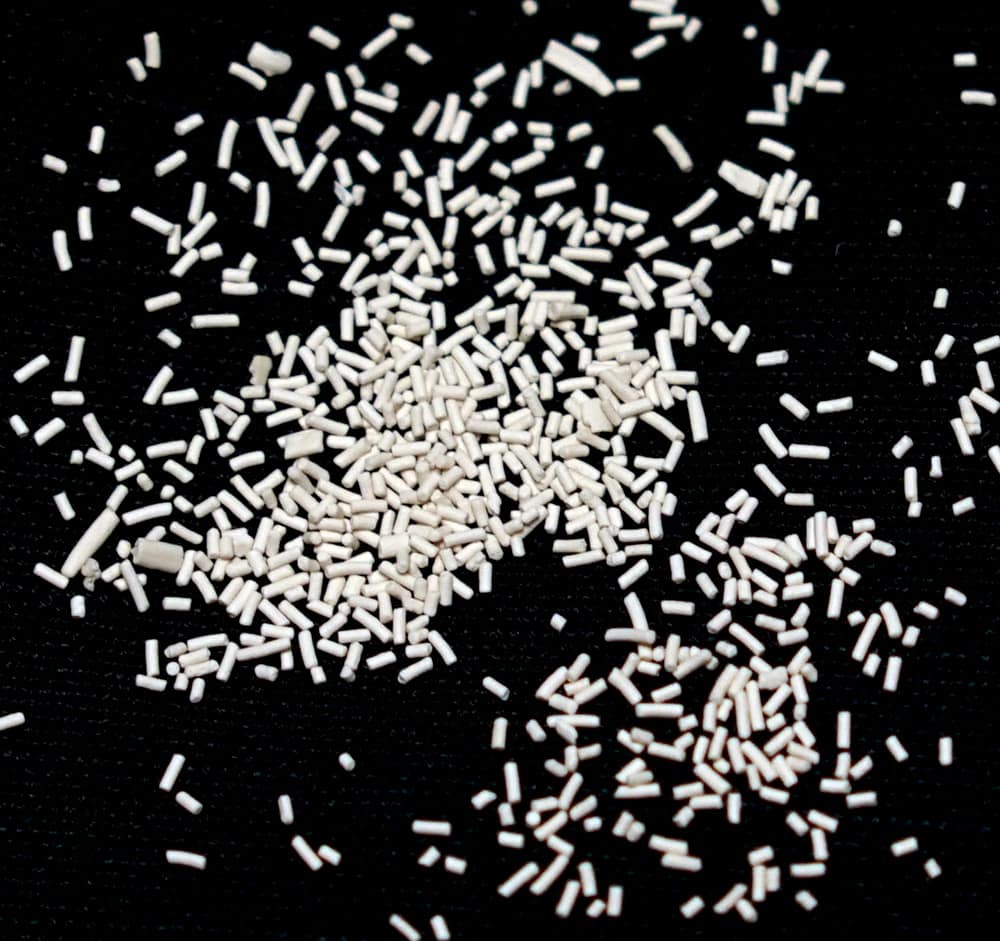
- Instant yeast (instant dry) - the thinnest grains. Go directly into the flour without melting. The most convenient, the most stable in the pantry, and what most modern recipes assume by default.
- Active dry yeast - coarser grains. You need to "awaken" in lukewarm water (35-40°C) with a pinch of sugar, for about 10 minutes, until a foam forms. If not the foam - the yeast dies, and this is the time to discover it and not after two hours.
- Fresh yeast (cube) - moist and crumbly. They work great, but they are only kept in the fridge for two or three weeks and in the freezer they lose some of their strength.
Conversion between the types: fresh yeast is about three times the weight of instant. 7 grams instant ≈ 9 grams active dry ≈ 21 grams fresh. If an old Israeli recipe calls for a whole cube (50 grams), that's about 17 grams of instant - a lot, and you can usually get less.
How much yeast do you really need?
Less than you think. Yeast is an engine, not a flavor component - and in fact, a large amount of yeast actually damages the taste and leaves behind a pungent "yeasty" smell. The amount is measured as a percentage of the weight of the flour.
- 0.1%-0.3% instant - long fermentation of 12-24 hours, usually in the refrigerator. The most flavor. This is the range of Neapolitan pizza dough.
- 0.5%-1% instant - fermentation of 2-4 hours at room temperature. Standard home range for rolls and bread.
- 1.5%-2% instant - fast fermentation of about an hour. Suitable for rich and sweet doughs, the sugar and fat in which slow down the yeast.
If you want tastier bread without changing anything else: cut the amount of yeast and double the rising time. This is the cheapest upgrade available.
Temperature: The variable that controls the whole board
Approximately, every 8 degrees doubles or halves the rate of fermentation. Dough that rises for two hours at 24°C will take about four hours at 16°C, and about an hour at 32°C. This is why the exact same recipe behaves differently between winter and summer.
- 18-22°C - slow and flavorful fermentation. Ideal if you have time.
- 24-27°C - the sweet spot for most doughs. Fast enough for a day, slow enough to develop flavor.
- Above 30°C - very fast, but the taste is flat and the window where the dough is perfect becomes very narrow.
- In the refrigerator (4 degrees) - the fermentation almost stops but not completely. This is a "cold rise", and it both improves taste and allows you to split the work into two days.

The first swelling versus the second
The first swelling (bulk) happens on the entire block of dough, after kneading. That's where most of the flavor and structure develop. After it is shaped, then comes the second (final) puff on the prepared shape - much shorter, and its main function is to return air to the dough after the shaping has taken the gas out of it.
A common mistake: rise the first one exactly and then let the second run until the dough barely holds itself. A final rise that is too long is the number one reason for bread falling apart in the oven.
The finger test: how do you know the dough is ready
Press a floured finger about a centimeter into the dough and watch what happens to the hole:
- The hole returns immediately and almost disappears - the dough did not rise enough. Give it another 20-30 minutes.
- The dimple returns slowly and leaves a slight dent - this is the moment. to the oven.
- The hole remains open and the dough around it sighs and sinks - too much rise. You can still save: refold, shape and give a second short puff.
And regarding "double the volume" - this is a good guideline for the first swelling only, and even there it is an approximation. In the final swelling, look for an increase of 50%-75%, not doubling.
What slows down the yeast
- Salt - necessary for the taste and structure of the gluten, but slows down fermentation. That's why you don't pour salt directly on the dry yeast before there is flour between them.
- Sugar - in a small amount nourishes the yeast, in a large amount (over 10% of the weight of the flour) it draws water from it and slows it down. Sweet doughs really need more yeast or more time.
- Fat - butter and oil coat the gluten and also slow down the swelling. This is why brioche dough takes forever.
- Cold - does not kill, only delays. Yeast that came out of the fridge will start working as soon as the dough warms up.