BakingSourdough
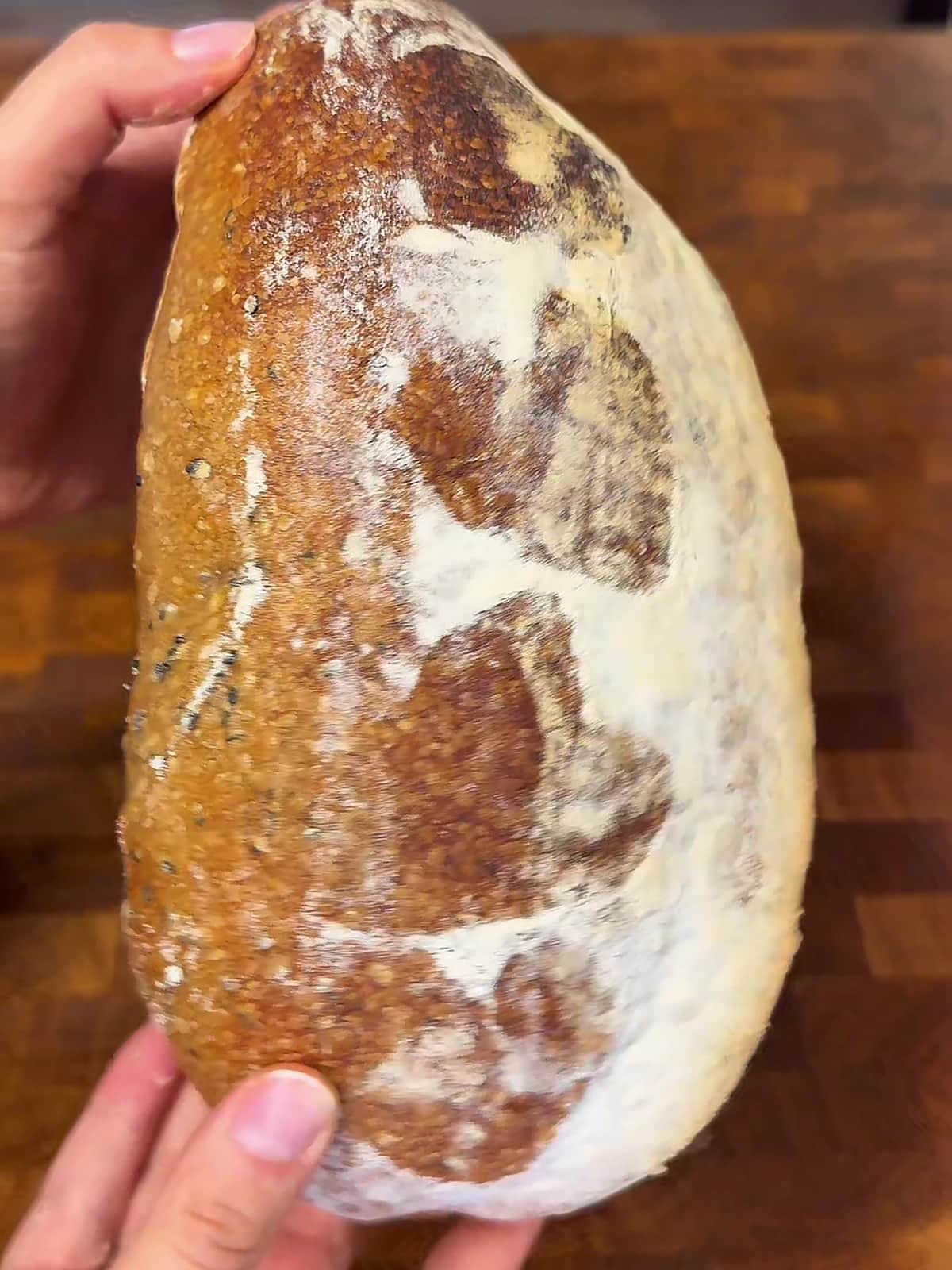
Sourdough bread with hearts
Sourdough bread with half whole wheat flour and golden hearts on a white crust, with a moist and airy crumb and the deep taste of real bread. Looks like a loaf from a bakery.
Jump straight to what you need
Nutrition values per serving
Calories
89 cal
Protein
3.2 g
Carbs
18.3 g
Fat
0.5 g
Fiber
1.5 g
Difficulty
Medium
Prep time
50 min
Cook time
40 min
Servings
18 servings
Ingredients
Check off ingredients while shopping or cooking.
Scale
200 g wholemeal flour
200 g Bread flour
250 g cold water (to fermentolyse)
50 g cold water (Keep aside and add a drop at a time while kneading)
80 g Active white sourdough starter
8 g salt
to hearts
1 A sheet of baking paper (for cutting hearts)
2 tablespoon white flour (for sifting over the square)
Method
Check off steps while cooking so you keep the flow.
Mix the wholemeal flour, the bread flour, 250 grams of the water and the active sourdough starter in a box until there is no dry flour left, and let it rest for 30 to 60 minutes. This is fermentolyse: the flour, water and sourdough starter rest together from the beginning, the flour absorbs the water and the gluten starts to build while the fermentation is already working.
Start kneading, by hand or with a standing mixer. I work with the Wilfa ProBaker, which holds heavy doughs without the motor getting tired in the middle of a long kneading, and you have a discount code ofri7 on the Wilfa website. While kneading, add the 50 grams of water we kept aside a drop at a time. Wait for each addition of water to be completely absorbed by the dough before adding the next one, and that's how you reach 75% hydration without the dough falling apart.
After a few minutes of kneading, add the salt along with the last drop of water, and continue kneading until the dough is uniform and smooth, detaches from the sides of the box and passes the window test. With 50% wholemeal flour the dough will feel a little coarser than white dough, which is perfectly fine.
Leave the dough in the same box, close with a lid and start baking. A rectangular box with straight sides is better than a bowl because it doesn't need oil, it's easy to fold inside and the sides show exactly how much the dough has risen. Make a round of folding every 30 to 45 minutes for the first two hours, then let the dough rest until it almost doubles in volume and feels alive, plump and airy.
Transfer to a lightly floured surface, preshape and let rest for 20 minutes, then shape into a tight loaf and transfer to a floured basket with the seam facing up.
Put the basket in the fridge overnight. The cooling stabilizes the loaf, makes it easier to score and allows the hearts to come out sharp and precise.
Preheat an oven with a cast stone to 250°C at least 45 minutes before baking, so that the stone is really hot.
While the oven is heating up, cut out the hearts. Fold the baking paper in half, cut half a heart on the fold and open, just like in first grade. Cut out three to four hearts of different sizes, about 5 to 7 centimeters each.
Take the loaf out of the fridge and turn it over on a floured surface. Arrange the hearts on the dough at intervals, on one half of the loaf, and press them lightly so that they stick together.
Generously sift white flour over the whole loaf through a fine sieve, then lift each heart gently with the tip of a knife or tweezers without dragging it on the dough.
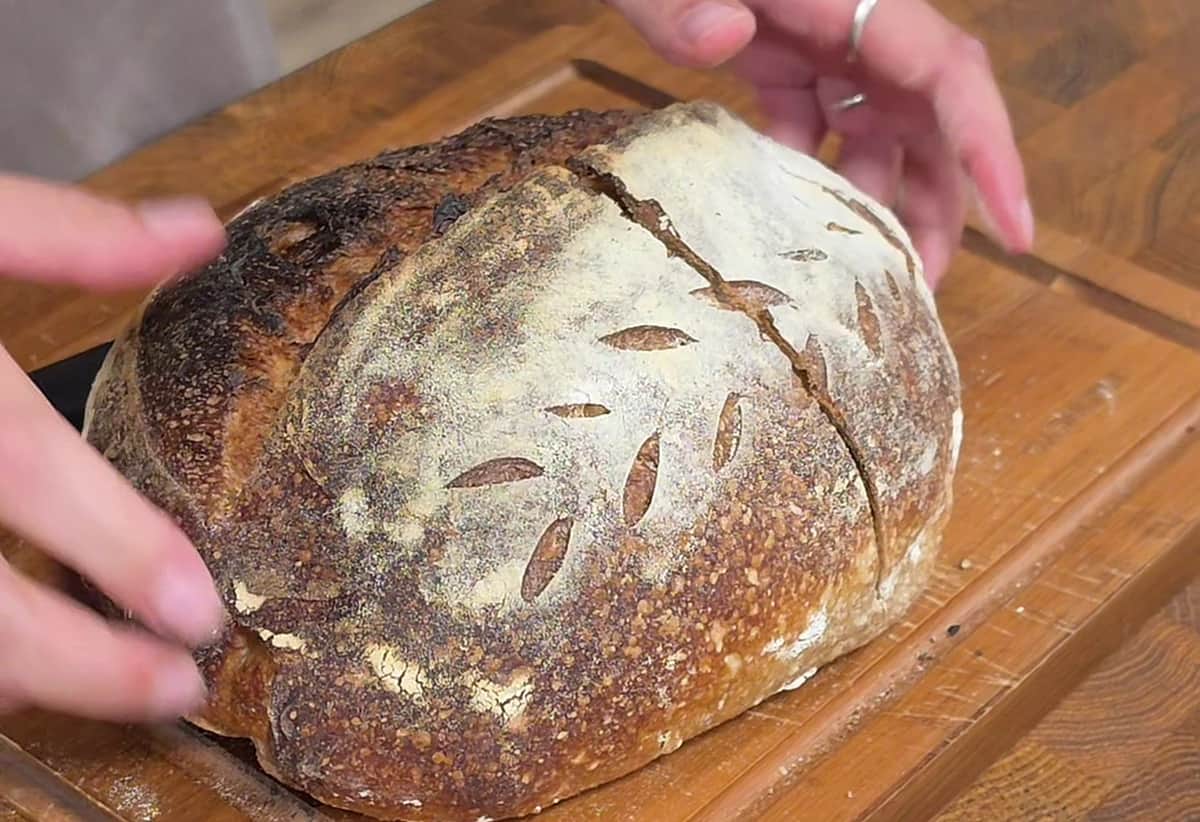
Cut one deep slash along the loaf, on the side without hearts, and slide on the stone. Bake for 15 minutes at 250°C with steam, then reduce to 230°C and bake for another 20 to 25 minutes. The floured area will remain white and the places that were under the hearts will turn brown, and this is how you get golden hearts on a white background.
Cool on a wire rack for at least two hours before slicing, otherwise the crumb will be crushed and the bread will be sticky.
Small tips that make a difference
- Chill the loaf before scoring to get clean lines.
Frequently asked questions
- How long does the whole process take?
- About 24 hours including proofing, but most of that is waiting. Hands-on work is roughly an hour.
Keep browsing this mood
A few strong ways to stay in the same lane without starting a new search from scratch.
Watch how it's made
Guides that help with this recipe
The background behind the techniques in this recipe — for when you want to understand why it works, not just follow the steps.
- Guide
Sourdough Starter: The Complete Guide to Feeding, Hydration and Temperature
Everything you need to keep a starter alive at home: feeding ratios, hydration, temperature, which flour to use, and how to tell it is truly ready to bake with. - Guide
Dough Hydration: What the Number Means and How to Choose It
75% hydration, 60%, 100% - what that actually means, how to calculate it, why the same recipe behaves differently in your kitchen, and how to go wetter without the dough sticking to everything. - Guide
Pre-Ferments: An Introduction to Poolish, Biga, and Why They Are Worth It
What a pre-ferment actually is, how it upgrades flavour and texture, and how to choose between poolish and biga for the bread or pizza you want to bake.
More recipes you may like
A few more recipes in the same direction, worth a look before you move on.
- Low calorieSourdough
- Low calorieSourdough